Datrix
Choosing the best AI server manufacturer is not a simple contest between brand names. It is a practical decision involving GPUs, memory, networking, cooling, software, and long-term support. A powerful server may still disappoint if its thermal design throttles performance during sustained training. A cheaper system may become expensive after warranty coverage ends.
Industry expert Jensen Huang has said, “AI is the most powerful technology force of our time.” His observation explains why server selection now affects research, manufacturing, healthcare, and cloud operations. However, the strongest AI server manufacturer depends on the workload. Large language model training needs dense GPU configurations, fast interconnects, and reliable liquid cooling. Inference deployments may value energy efficiency, compact design, and predictable response times.
This guide compares leading manufacturers through measurable criteria. These include accelerator compatibility, rack density, power usage, firmware stability, technical support, and deployment experience. It also examines whether vendors provide practical configuration advice rather than impressive specifications alone. Real-world details matter, such as a server’s noise level, cable layout, replacement process, and performance under continuous load.
There is no perfect answer. Vendor rankings can change quickly as new GPUs, processors, and cooling systems appear. Some comparisons also rely on limited testing environments. That weakness deserves attention. Readers should verify current pricing, regional service coverage, and independent benchmark results before purchasing. The best AI server manufacturer is therefore the one that fits the customer’s workload, budget, facility, and operational skill—not merely the one with the fastest headline benchmark.
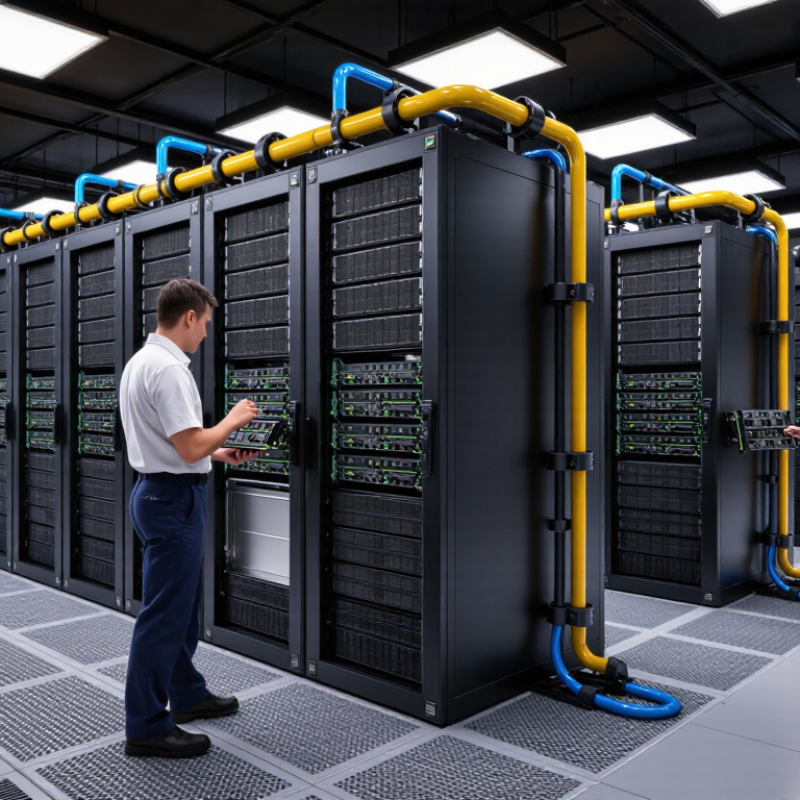
A strong AI server manufacturer does more than assemble powerful components. It designs a complete computing platform for demanding workloads. This includes accelerator integration, memory balance, high-speed networking, firmware, and storage planning. Engineers should understand how models behave during training and inference. A server may look impressive on paper, yet perform poorly under sustained heat. That difference matters.
Real experience appears in practical details. Airflow must reach dense accelerator cards without creating noisy hot spots. Power systems need enough headroom for sudden workload spikes. Technicians should test machines with realistic datasets, not only brief laboratory benchmarks. Reliable manufacturers also document failure alerts, replacement procedures, and software compatibility. Clear documentation is a sign of professional discipline. Vague promises are not.
Tips: Ask for thermal test results, workload-based benchmarks, and service response times. Check whether the manufacturer supports firmware updates over several years. Review warranty terms carefully. A useful question is simple: “What happens when one accelerator fails?” The answer reveals operational maturity. Independent validation is valuable, although it is never perfect. I would also inspect the support process before purchasing. Fast hardware cannot repair unclear communication. Some specifications may be incomplete, and buyers should challenge them politely. The best manufacturer is defined by transparent engineering, dependable testing, and support that remains practical after delivery.
The best AI server manufacturer begins with workload analysis, not a product catalog. Training systems need dense accelerators, fast memory, and high-speed networking. Inference platforms often prioritize low latency, compact design, and predictable power use. The International Energy Agency’s Electricity 2024 report estimates that data center electricity demand could exceed 1,000 terawatt-hours by 2026. That projection makes efficiency a design requirement, not a marketing feature.
Engineers must balance cooling, power delivery, airflow, and service access. A well-built server may use liquid cooling, redundant power modules, and front-accessible components. It should also support current standards for rack power, thermal monitoring, and network interoperability. The Uptime Institute’s 2024 Global Data Center Survey highlights continuing concerns about power capacity and operational resilience. Manufacturers therefore need rigorous burn-in tests, firmware validation, and failure simulations before shipment.
The details matter. A loose cable can restrict airflow. Poor fan control can raise operating costs. Weak documentation slows repairs. No design is perfect. Some liquid-cooled systems still create maintenance challenges, especially in older facilities. Buyers should request measured performance, noise levels, energy use, warranty terms, and multi-year support plans. Independent testing is valuable. So is asking how the manufacturer handles component shortages and future upgrades. The strongest supplier is not simply the one with the fastest server. It is the one that explains trade-offs clearly and proves reliability under real workloads.
The best AI server manufacturer depends on workload, budget, and deployment goals. Today’s market leaders are usually established enterprise hardware companies, specialized accelerator platforms, and large cloud infrastructure providers. They compete through GPU density, high-speed networking, liquid cooling, and reliable service support. A strong manufacturer should offer flexible configurations, transparent performance data, and long-term replacement planning.
In practical deployments, experienced buyers examine more than processor speed. They test memory bandwidth, power consumption, rack compatibility, and cooling behavior under sustained workloads. Some manufacturers provide dense systems for model training. Others focus on inference servers, edge deployments, or private data centers. Independent certifications and documented field results add credibility. Still, performance claims can look better in controlled tests than in busy production environments. That gap deserves attention.
Tips: Compare complete operating costs, not only purchase prices. Request workload-based benchmarks using your own model sizes. Check service response times, spare-part access, firmware updates, and technician coverage. Review security controls and data-handling policies before installation. A small pilot can reveal fan noise, thermal limits, and unexpected software issues. Do not ignore these details.
The leading companies are not always the best fit for every organization. A smaller specialist may provide better customization, while a larger supplier may offer stronger global support. My view is slightly cautious: AI hardware changes quickly, and today’s premium design may age sooner than expected. Choose an upgrade path, not just an impressive specification sheet.
Rising data-centre electricity demand reflects the rapid expansion of AI computing. Manufacturers that combine high compute density, energy efficiency, advanced cooling, reliable networking, and scalable service support are best positioned to lead the AI server market.
Source: International Energy Agency, “Energy and AI,” 2025. The 2030 figure is a projection.
The best AI server manufacturer is not always the one showing the highest benchmark score. Compare complete systems, not isolated processors. MLCommons’ MLPerf Training results show major performance differences across accelerators and software configurations. However, those figures may change with model size, precision, cooling, and workload design.
A practical evaluation should test your own models using identical datasets. Keep a record of training time, power draw, memory use, and failed runs. Small details matter.
Thermal design deserves serious attention. The Uptime Institute’s 2024 Global Data Center Survey reported that 55% of respondents experienced an outage during the previous three years. AI servers can increase rack density and cooling pressure quickly.
Ask manufacturers for airflow diagrams, operating temperature ranges, acoustic data, and component replacement procedures. The International Energy Agency also reports that data center electricity demand is rising sharply, with AI as an important driver. Therefore, compare performance per watt, not performance alone.
Support quality matters too. Review warranty terms, spare-parts availability, firmware updates, and response times. A polished demonstration can still hide inconvenient maintenance work. This is where many evaluations become less certain. Test before signing.
The best AI server manufacturer depends on the workload, not the logo. For large model training, choose systems with high accelerator density, fast interconnects, strong power delivery, and liquid-cooling options. Training can run for weeks, so thermal stability matters more than peak specifications. The Stanford AI Index 2025 reports that global private AI investment reached $150.8 billion in 2024. That scale increases pressure to improve utilization and reduce idle capacity. For enterprise inference, balanced servers may fit better. They should offer efficient accelerators, expandable memory, low latency, and simple remote management. A huge training platform can be wasteful here.
For edge inference, prioritize compact designs, rugged operation, and local support. A factory cabinet has different needs from a research cluster. Colocation buyers should examine rack power limits, cooling capacity, network topology, and maintenance procedures. The Uptime Institute’s Global Data Center Survey 2024 highlights continuing concern about power availability and rising rack density. That makes cooling and facility compatibility practical purchasing criteria. MLPerf results can compare performance, but they do not show software migration effort, service delays, or real electricity costs. I would not treat benchmark leadership as a final decision. That shortcut often fails.
Tips: Request a workload test using your own models and data sizes. Measure tokens per second, energy use, failure recovery, and operator time. Check warranty response and spare-part access before signing. A cheaper server may become expensive when cooling, networking, and support are added. Recheck the design after six months. AI requirements change quickly.
A practical comparison of manufacturer profiles for training, inference, research, enterprise deployment, and edge AI workloads.
| Manufacturer Profile | Best-Fit Use Cases | Typical Accelerator Configuration | Server Form Factors | Networking Options | Thermal Design | Typical Deployment Scale | Main Strengths and Considerations |
|---|---|---|---|---|---|---|---|
| Large-Scale OEM |
Foundation-model training Large inference clusters Enterprise AI platforms |
Multi-accelerator systems, commonly 4–8 accelerators per node; higher-density systems may use 8 or more. | Primarily 4U–8U rack servers; some liquid-cooled high-density platforms. | 100–400 Gb/s Ethernet or InfiniBand-class fabrics, depending on cluster design. | High-airflow air cooling; direct liquid cooling available for high-power configurations. | Departmental clusters to multi-rack data centers. | Strong validation, global service coverage, and broad configuration options. Purchase processes and customization can be slower. |
| Specialized HPC Integrator |
Scientific computing Simulation and digital twins Distributed AI training |
Accelerator-dense nodes with optimized CPU, memory, storage, and fabric combinations; configurations are often tailored to workload requirements. | 4U–10U rack systems, liquid-cooled nodes, and complete cluster solutions. | High-speed low-latency fabrics, commonly 200 Gb/s or higher for large distributed workloads. | Rear-door heat exchangers, direct liquid cooling, or facility-level cooling integration. | Research clusters to dedicated supercomputing environments. | Excellent architecture and performance-per-cluster optimization. Requires more planning for facility power, cooling, and operations. |
| Flexible ODM |
AI cloud providers Private data centers Large-volume infrastructure deployments |
Standardized multi-accelerator designs, with options for different accelerator generations and memory capacities. | 4U–8U rack servers, often designed for repeatable large-volume deployment. | 100–400 Gb/s Ethernet or InfiniBand-class connectivity, subject to selected components. | Air-cooled and liquid-cooled options; cooling design is usually optimized for a specific rack plan. | Multi-rack to very large data-center deployments. | Competitive unit economics and strong customization potential. After-sales support may depend heavily on the integrator and region. |
| Enterprise System Integrator |
Corporate generative AI Model fine-tuning Virtualized AI and analytics |
Usually 1–4 accelerators per server, with configurations selected for departmental capacity and software compatibility. | 2U–4U rack servers, sometimes tower systems for smaller offices. | Typically 25–100 Gb/s Ethernet; higher-speed uplinks are available for clustered deployments. | Primarily air cooling with standard data-center rack requirements. | Single servers to small and medium clusters. | Easier procurement, integration, and support for existing IT teams. It may not deliver the best economics for very large-scale training. |
| Workstation and Visualization Specialist |
AI development Computer vision 3D visualization and local inference |
One or more professional or data-center-class accelerators, commonly selected for software development and visualization workloads. | Tower workstations, compact systems, and 2U–4U rack workstations. | Standard 10–25 Gb/s Ethernet; faster networking is optional for shared storage or small clusters. | Air cooling with workstation-oriented acoustic and thermal design. | Individual users to small engineering teams. | Fast deployment, convenient local access, and lower facility requirements. Limited scalability for multi-node distributed training. |
| Edge and Rugged-System Builder |
Factory inspection Retail analytics Transportation and remote-site inference |
Low-power accelerators or compact accelerator modules, typically optimized for inference rather than large-scale training. | 1U–2U short-depth rack systems, compact boxes, fanless systems, and rugged enclosures. | 1–25 Gb/s Ethernet, wireless connectivity, and industrial interfaces depending on the environment. | Enhanced air cooling, dust protection, vibration resistance, and extended-temperature options. | Individual sites to distributed fleets. | Strong environmental durability and low-latency local processing. Compute capacity and upgrade flexibility are generally lower than data-center systems. |
| Regional Value-Focused Builder |
University labs Startup AI projects Budget-conscious inference and fine-tuning |
Entry-level to mid-range multi-accelerator servers, commonly 1–4 accelerators per node. | Tower, 2U, and 4U rack systems. | Usually 10–100 Gb/s Ethernet, with higher-speed networking available for selected projects. | Mostly air cooling with standard rack or server-room requirements. | Single systems to small clusters. | Responsive local service and attractive project pricing. Long-term component availability and global support should be checked carefully. |
Selection note: The most suitable manufacturer depends on accelerator availability, total cost of ownership, power and cooling capacity, software support, required networking, deployment scale, warranty coverage, and expected upgrade cycles. The specifications shown are typical industry ranges rather than guaranteed configurations for every supplier.
It designs a complete platform, not merely a box filled with powerful components.
Request workload-based benchmarks using realistic models and data sizes.
Dense accelerator cards create concentrated heat inside the chassis.
Training systems need dense accelerators, fast memory, strong networking, and stable power delivery.
Balanced systems often provide efficient accelerators, expandable memory, low latency, and remote management.
Choose compact systems with rugged construction, predictable power use, and local support.
Ask what happens when one accelerator fails.
No. Benchmarks compare selected conditions, not every operating cost.
Review rack power limits, cooling capacity, networking, maintenance, and software compatibility.
Choosing the best ai server manufacturer requires more than comparing prices or processor specifications. A strong manufacturer should demonstrate expertise in designing complete systems that combine high-performance accelerators, efficient cooling, reliable power delivery, fast networking, scalable storage, and secure management tools. It should also maintain strict quality control, support flexible configurations, and provide dependable maintenance throughout the server’s lifecycle.
The leading manufacturers in the AI server market typically distinguish themselves through engineering capability, production consistency, supply-chain stability, and responsive technical support. To compare them effectively, organizations should evaluate workload compatibility, total ownership costs, upgrade options, energy efficiency, deployment time, and warranty coverage. The right choice depends on the intended use case: research institutions may prioritize maximum computing density, enterprises may need balanced performance and manageability, while smaller teams may value affordability and expandability. Ultimately, the best ai server manufacturer is the one that aligns system design, service quality, and long-term scalability with the customer’s specific AI goals.
